• Home
  • About
  • Contact
    • Category
    • Category
    • Category
  • Shop
  • Advertise
Powered by Blogger.

Pages

facebook twitter instagram pinterest bloglovin Email

A Cup of Classics

Like most writers who are yet to finish a first draft (pause for heavy, disappointed sigh) I am constantly flirting with different ideas, totally unable to commit to one, and forever procrastinating on all of them.

I spent a lot of time saying that I didn't know why this was - maybe I just had too many good ideas? Maybe it's just the way my brain works? Maybe I'm secretly a genius and, like my fellow genius (heavy sarcasm) Leonardo Da Vinci, simply need several outlets to keep my genius contained?

Well. I sincerely doubt that.

And, I know exactly why I've managed to start and tinker with several manuscripts without ever finishing one:

Fear. 

Fear is what's holding me back. It may sound silly - what am I afraid of, after all? A blank page?
Well, actually, yes.
Writing is so very close to my heart, and, like all writers, I desperately want to succeed. In a weird backwards twisty way though, it's this desire to succeed that is preventing me from doing just that. I am too scared to get something wrong.
I am too scared of the hard work necessary to make a novel work.
I am too scared of choosing the wrong idea.

In short, I am scared of failure.

This surprised me at first because I have never been someone afraid to make a fool of myself. I eagerly get into sports despite having no hand-eye coordination whatsoever, and have no problem getting on the dancefloor with a 0% blood-alcohol level despite having the rythmn and grace of a hippopotamus with a leg missing. 

I'm not afraid of trying things in general. In giving things a go. Taking a shot. 

Becuase after you take a stab at something like sports, or dancing, or chess or something else you don't really care about, you can just laugh about it and not really think about it again. 

Writing's different. Writing means something to me, and failing at the thing I've always secretly thought would be the thing I'd get good at is scary. 

But enough of that rubbish now. If 2020 has taught us anything, it's that there are no guarantees in this life and what's here tomorrow might not be there the next. 

So here goes.

Words on paper, and whatnot.
Share
Tweet
Pin
Share
No comments


This book was my companion as the days got colder, as the shadows got longer, and the world retreated in on itself. In the eerie silence of the new lockdown norm, I had lost the job I'd been offered, and was spending my days sketching and walking down a wooded path to the to the local shops.

Woolf's words were my solace, in a way. I could not have picked up a better book. 

Now, an attempt to put my thoughts on this work to paper:

-The prose punctured me; it found its way, light beaming, into the naked crevices of me and there it stayed, pushing and prying at the flimsy skin of studied existential ignorance I'd built for myself over the years.

- Never, since I read Wuthering Heights on a storm-wreaked weekend at the gloriously angst-ridden age of 15, has a book been more perfectly timed.

- Woolf understands. She wrote in spells of madness and madness - it is clear - illuminates. Perhaps it is only when we are teetering on the edge of things that they are thrown, like a lighthouse beam, into sharp relief. 

- She writes of the rich, tumultuous existence and careening peaks and troughs of emotion that exist within all of us, rarely seen by others.


- She articulates the fragility and often arbitrary-seeming nature of human relationships. A husband and wife for instance, so close, and simultaneously so very distant from each other. In the course of an evening they go from enemies, to confidantes, to begging love from one another, yet all in subtlety, all played out in nuance. 

- The writing on childhood was especially poignant. She writes of one of the youngest children, "He will never be happier than he is right now", as lamented by his mother. In the course of the narrative, this is shown to be resoundingly true. The truth of this temporal and fading childhood happiness smacked me in the jaw. It sounds bleak, and hopeless, that we all get increasingly miserable as we grow. Perhaps it is. But it is nevertheless true. 
Woolf rages, and she mourns the fact that children must grow up. Why? She writes as Mrs.Ramsay, Why must they?

- On this note, I loved how she captured the awe and serene reverence that young girls have for their mothers. I wasn't a child in the early 19th century, but she could well have been describing my own memories of "helping" my mother with her jewellery before going out to a posh dinner. "That's my mother" Rose thinks. 
Poignant again, because I too eventually lost this childhood awe. 

- In fact, so many passages could have been my own thoughts, verbatim, though with marked improvement to their clarity and general wordsmithery. 

The underlying anxiety that all of the characters have - from Lily Briscoe in the finale, painting, wondering at truth, to Mrs.Ramsay, finally alone in the light of the lighthouse, wondering if she does good for entirely selfish reasons, to Mr. Ramsay, wondering desperately how to get to Z, to the answer of it all, and instead distracting himself with comforting  thoughts of his wife and his 8 children, reminding himself that he is lucky. This muddle, this inner argument and tying and untying of self is familiar. 

I have had all of these thoughts, in some way or another. I have this same underlying awareness of some huge, unanswerable question.
The Meaning of Life, 
Unanswerable, certainly.
Though To the Lighthouse made me feel a little less alone in the askin.
Share
Tweet
Pin
Share
No comments
I am delighted to write that I started this reading year off on a HUGE high. The Shadow of the Wind was my companion over the New Year break and I absolutely could not put it down.

The Shadow of The Wind

By: Carlos Ruiz Zafon
First Published: 2001
Translated by: Lucia Graves


I love books that bring cities to life in such lucid detail that the rythms of the city become integral to the plot itself. This book does that for Barcelona. Zafon weaves autumn winds around crumbling alleyways, he has us in roaring cafes and quiet bookshops. The city's turbulent past bleeds out through the cracks in its cobblestones- the city, arguably, is the book's main character.

Set in the aftermath of the Spanish Civil War, Barcelona is grieving and themes of loss and ghostly loneliness tug at the protagonist's heels. Nevertheless, the protagonist, Daniel, is immediately likeable as a young bookish boy who gets swept up in the mystery of a lost author. His gradual unravelling of the mysteries of Julian Carax forms the backbone of the book. He is self-deprecating, charming, and flawed in a way that makes him very human.

Other characters include the beautiful but unattainable Clara, a blind girl several years older than Daniel who he reads to,  as well as a mysterious man with a burnt face seen smoking under lamp-posts, a bona-fide femme fatale and the unforgettable Fermin Romero de Torres, a homeless man that Daniel befriends with a dark past and witty way with words.

And on top of this suite of intriguing characters we have a winding helter-skelter of a plot that moves at a breakneck speed, cleverly interspersed with suspensful silences. From its beginning in a Cemetery of Forgotten Books, this story etches a path of mystery and fantastical twists and turns that perform a wonderful ode to classic Victorian literature. Crucially, however, the characters' groundings in human motivation and emotion prevents the plot from becoming farcical.

There are love stories, there is mystery, and above all there is friendship, with a powerful message of turning your back on loneliness, on emptiness and ghostly misery, and choosing a future, and friends, and family.

If I hadn't already made it clear, I thoroughly recommend this.
Share
Tweet
Pin
Share
No comments
It's a new year! Well - it's ten days into a new year!

I love this time of year - the promise of a clean slate, of new goals, or resolutions that haven't totally failed yet - how can anyone not be optimistic?!

I am perhaps too optimistic. I have set my #ReadingChallenge Goal for this year at..

..wait for it..

Fifty books. Yes. FIFTY. I have never read fifty books in one year in my entire life.

What gave me the confidence to try for fifty books this year I hear literally nobody ask?

Was it my success in last year's reading challenge - or lack thereof- given I only read eighteen out of my thirty book goal?

Is it the fact that I just reallly really want to?

Or the fact that OH DANG THERE'S SO MANY BOOKS I WANT TO READ IN THIS LIFETIME?

I'd say a combination of all three.

My hopes are high - it's just one book a week, after all. What could possibly go wrong?

Anyway, besides the FIFTY WHOLE BOOKS I want to read, I have some other goals for this year of reading.

GOALS.

1. Read a BALANCE of genres; including literary, historical fiction, fantasy and chick-lit. Variety is the spice of life!
2. Read at least 3 non-fiction books.
3. Read a classic work on feminism
4. Read the classics you've been meaning to get to
5. Read something in a foreign language (wish me luck!)

And there you have it!

Basically, I want to read as widely as possible, and cram my brain with as many new and different voices as I can.

I'd like to read more contemporary literary fiction too, as well as more ideological works - as I'm not an university any more it's been a while since I picked up anything really thought-provoking.

So there you have it! Thank you for reading this post, and thanks for joing me on this year's reading journey!
Share
Tweet
Pin
Share
No comments
Oh, man. Oh man oh man. 

I really wanted to win this year! I really did! And I really tried! I just wasn't able to push out the required 1667 words every single day. I mean, I could have, but it would have meant sacrificing too much of my mental health and time spent with my partner that I couldn't bring myself to give up. Real life, man! Who knew it would get in the way of my imaginary life?

But! I won't let that get me down, because I still wrote more words than I've ever written in a single month. And because this is my literature blog, I thought I'd do a roll-call of the highlights of my novel. Or, more accurately, novel draft. Or, let's be real, half-completed novel draft.

Feel free to steal this format for your own blog - I think it'd work well as a tag!

NANOWRIMO WRAP UP 2018


Words written: 38, 453

Words spelt correctly: significantly less

Chapters completed: 5, with a generous helping of random, out-of-order scenes that don't help the plot AT ALL.

Favourite line: "OUT OF THE WAY, MAGICAL MISCHIEF COMING THROUGH! DANGEROUS INGREDIENTS BOTH FLAMMABLE AND POISONOUS, MIND I DON'T TRIP, EXCUSE ME SIR, KINDLY MOVE YOUR ARSE LEST YOU TURN INTO A FROG, MAKE WAY NOW, MAGICAL MISCHIEF ON THE MOVE.."

Most absurd, 'help its nearly midnight and I need more words' line: If there was one thing that she had found to be dependable in fair natures, it was their utter independable-ness

Favourite character: My main character, but I also adore a ridiculous potion-selling runaway I created (whose dialogue was my favourite to write)

Favourite setting: The Fairy market stalls on the bridge.

Happiest moment: Writing the happily-ever-after scene!

Saddest moment: Realising that writing novels is really, really hard, and I just couldn't finish this month.

What I learnt this month: Discipline over inspiration, reasons over excuses.

And,

What I'm most proud of: The fact that I tried, and that I wrote so many words for a whimsical, fairytale passion project that otherwise would never have seen the light of day.

Thanks for reading, and I tag everybody that wants to do this! Let's say bye-bye to Nanowrimo and a big HO HO HELLO to December.

Now who else could do with a glass of wine?


Share
Tweet
Pin
Share
No comments
Ok, hear me out.. because I love Margaret Atwood, I really do.

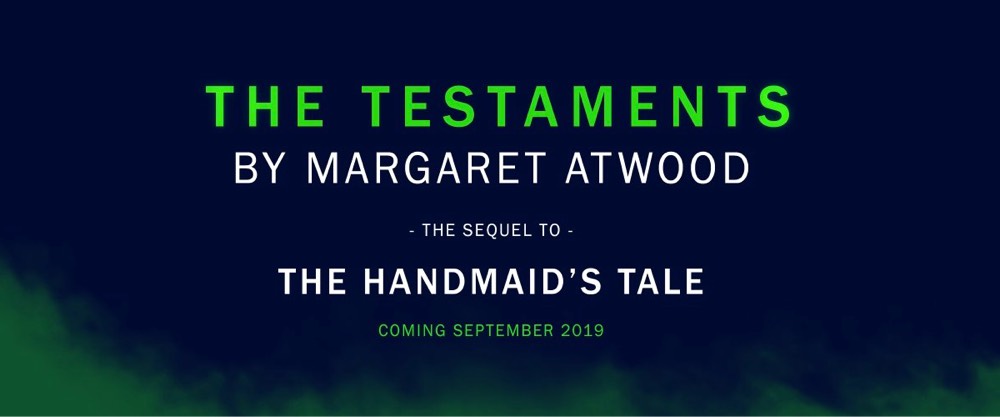
But honestly, before it was announced yesterday that Atwood was penning a sequel set 15 years after The Handmaid's Tale, titled The Testaments; was there anyone out there hankering in wait for more?

Image result for the testaments atwood

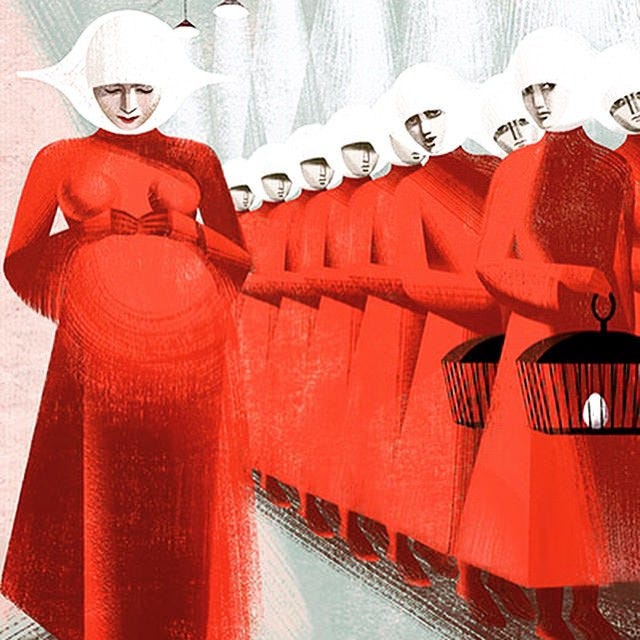
Like many women, I see The Handmaid's Tale as a seminal work of feminist literature. It may have been written years before I was born, yet its relevance persists. It tells a timeless truth about how women are treated, holding an unapologetic mirror to our own society, revealing the ugly oppression lurking beneath. Indeed, its cultural resonance as an example of how women are demeaned and controlled has led the costume of the Handmaiden (largely thanks to the TV adaption) to become symbolic shorthand for womens rights movements everywhere.

Related image


And, on top of all that, it's a bloody good bit of writing.

But all of that being said, why do we need a sequel? Wasn't the whole story told? Everything that needed to be said, said? Said succinctly, poetically, powerfully.

Following the sequel announcement yesterday afternoon my first thought was "Oh, I'll definitely be reading that". But my own certainty gave me pause:

Why was I so sure I would like it?


Why, when the common denominator of sequels tends to be that they detract from, rather than add to, the legacy of the original? (Chief exception here being High School Musical 2, obviously)

I'm not saying it will be bad. I'm not saying it can't be the greatest literary work of the decade. Knowing Atwood's writing, it'll likely be gut-punchingly good. Nor am I critical of the need for more feminist literature.We are in constant need of works that examine, deconstruct and shed light on this bizarre gendered world we live in. But we need new voices. And we do have them; we know they're out there.

So why are they not being marketed to the degree that a sequel, a mere elaboration of an already-well-made point, is?

It may be cynical of me, but I can't imagine that Atwood's plans for a sequel would have come to fruition had there not been a pre-exisiting fanbase for the massively popular television spinoff of her book. Again, being cynical, she surely would have seen the potential market value that Handmaid's Tale represented.
Related image

And this is linked to a wider trend in publishing.

It seems the publishing world, in its constant effort to stay relevant, is going the way of cinema: rehashing old properties, capitalizing on nostalgia and trusting only in already-established names.

Related imageOne need only look at recent bestseller lists to see this is pandemic to the industry; The Harry Potter series finished years ago but The Cursed Child and both Fantastic Beasts screenplays sold like hot cakes. Neither property represented anything remotely new, or original, but were familiar, safe (And dare I say it, boring) purchases, which will no doubt be repeated and repeated until every detail of the wizarding world down the type of toilet paper used by Arthur Weasley's dad has been exhumed.

At the other end of the spectrum you have Harper Lee's Go Set A Watchman, pushed out under dubious authorial consent and absolutely not presented in the way it was originally intended. Lee's artistic intent was sacrificed in the name of a huge payday, yet we all still bought it, because it's Harper Lee, and, well, we love Harper Lee. And it is precisely this knee-jerk buying response elicited by established names that seems to be the publisher's goal.

Margaret Atwood is well-known, widely read and hugely respected, with a TV audience to boot. She is a publishing goldmine.

The angle of her publishers seems to be that the world of Gilead is more relevant than ever to women's rights. And yes, it is. But we already have a book about it. That's why women are wearing Handmaiden costumes to rallies. And, even as Atwood remarks that her inspiration is "the world we've been living in" - a noble sentiment to be sure - I can't help but feel like surely someone, somewhere else, has something new to say?

I'm not saying The Testaments won't have any literary value, but I am saying that the steamrolling of publishing by big name authors represents a wider, worrying trend in arts and media wherein safe success is valued far and above creative risk. The only books deserving of large-scale marketing campaigns and wide readership are those written by already established authors, often nitpicking their own work which was completed yonks ago.

And that's sad. Because a world of stories told by the same few people means a very narrow choice of stories.

I worry about all the possibly brilliant, contemporary voices I'll never get to read because they were shuffled off the shelf to make way for the latest Atwood. Even after writing all this, I know I'll probably buy a copy of The Testaments.

I'm no expert on any of this - just a girl with a blog. But I've still got to wonder,  where is the room for creative risk, for originality?

Where is the room for new and diverse voices?

And one last time, do we really, really need another Handmaid's Tale?

Doesn't it do more on its own, a singular, powerful voice against oppression?

Do we really want to mess with that?
Related image


Share
Tweet
Pin
Share
No comments
When I was little, I knew that books were magical. I could put my grubby hands on a book, and be whisked away to Narnia, or Hogwarts, or the Magic Faraway Tree.

These books found further life in my daydreams. They'd stay with me at school, at lunch time, on the car ride home. I lived these stories, and I loved these stories.

Strange_Dreamer_Printz.pngBut that was when I was little, and whilst my love of books has never waned, it's been a very long time since I've been left awestruck by the magic in a book. A very long time since I've felt the magic leak through the pages, sweep me up, and not let go.

Until this book.

Strange the Dreamer is a little piece of magic.

A love-letter to fairytales and daydreams and dreamers and long-forgotten myths, Strange is neither cloyingly sentimental, nor childish, nor does it take itself too seriously.

It tells the story of a lost city, and dead gods, and a librarian that loves to dream.

In Lazlo Strange we have a a protagonist who is endlessly likeable, being both an underdog and a librarian. We get to see a fairy story through the eyes of one who loves stories, and then we marvel, wide-eyed, just as he does, at his sheer dumb luck to find himself inside of one.

 I have always had a special place in my heart for characters (and people!) that don't quite fit in with those around them. People that are earnest and good, yet lonely, and ridiculed, and hoping for things to get better. This book has that in spades, with warm descriptions of friendship, and honest tenderness, and blossoming love.

The setting is far from standard fantasy fare; drawing inspiration and reference to a generous mix of Eastern and Western mythologies and tales, as well as creating an elegant magic and lore which is of its own world alone.

Finally, the prose itself is a tantalizing dance between modern young adult narrative and an intricate weaving of a tapestry, rich in its depth and crystalline in its imagery. The result is somehow both stunningly literary and intensely readable. (I finished it in less than a week)

Huge in its scope, romantic in its essence, and beautiful in its telling, I feel like this was a book written by someone that just loves to love stories.

And, as I'm also someone that loves to love stories, I couldn't help but fall in love with it.

5 iced coffees.
Share
Tweet
Pin
Share
No comments

(aka, that time Hemingway literally published his diary and won a Nobel Prize)

I finally read The Sun Also Rises. I had never bothered with it before, because unfortunately for him, my first exposure to Hemingway was The Old Man and the Sea, forced upon me by an unenthusiastic English Lit teacher at fourteen years old. The language was dull and the subject matter even more so: an old man tries to catch a fish. Like, tries really really hard to catch a fish. He catches the fish, then the fish dies.

The end.

Suffice to say, I did not care for it. I stayed away from Hemingway from then on, and was further deterred by his reputation as a misogynistic, adulterous drunk. However, Literature As A Whole adores Hemingway, so I, assured that there would be no paint-drying, fish-catching old-man antics, gave Sun a try.

First of all, they lied about the lack of fish-catching. There is a big ol’ detour in the middle of the book where two manly male characters sit by a river for some manly male time catching fish. It’s a shame, because the bits before and after that are full of juicy juicy action.

The story actually reads a bit like a 1920s version of Geordie Shore. Friendships, rivalries, jealousies and unconsumated love form the book’s backbone. (I couldn’t help but feel like fourteen-year-old me would have been a lot warmer to Hemingway if this was the book she’d read first). I was pleasantly surprised by the main character – here was a kind-hearted and likeable hero – in love with a woman who is engaged to his friend and also cheating on him with his other friend. And is getting divorced. And also has a thing for bullfighters. Actually, she wants to sleep with pretty much anything that moves.

Anyway, in spite of my fish-informed prejudice I enjoyed the book, even with all its melodrama and certain elements that did not age well. (The anti-Semitic and sexist language, for instance) I put it down and thought, I get it. This is why Literary People like Hemingway. His simple style places you squarely in the scene; I felt like I was there in the Spanish fiesta; sipping coffee at the cafes and drinking wineskins in the taverns.

In fact, I liked it so much I decided to find out a little more about expat life in the 1920s.

And here, my hard-won respect for Hemingway disintegrated.

I discovered that, like Jake the protagonist, Hemingway also worked as a journalist in Paris. This, alone, made sense, given the richness of the scenery descriptions. Usual, even, to base a novel off one’s own experiences. But there’s inspired by, and then there’s straight-up reporting: it transpires that Sun is little more than an embellished diary entry.

Hemingway made himself the hero of his own story, then proceeded to decimate the characters of real people who thought him a friend.

For more of what really happened, here’s a Vanity Fair article that covers just about every detail.


Basically, there really was a Brett Ashley. (the protagonist's love interest) Her name was Lady Duff Twysden. She really was divorced, and sleeping with Hemingway's friend. There really was a Robert Cohn. His real name was Harold Loeb and he really had had an affair with Lady Duff. He was also a friend of Hemingway’s who, understandably, didn’t take the anti-Semitic vitriol heaped upon him in Sun all too well. The real Brett Ashley and Jake and Robert Cohn and everyone else went to the bullfighting fiesta in Spain in 1925.

All of them, based on real people. And then there was one addition to the party not mentioned in the book: Hemingway’s wife. 

He had a WIFE.

I learnt that Hemingway was infatuated with Duff. Here I saw sharply his reasons for writing the book: just as the old man couldn’t catch his fish, Hemingway couldn’t sleep with the woman he wanted. Tragically, he already had a wife.

When I think back to Jake and Brett’s intimate conversations, it reads like wishful thinking. As if he wanted to give them some credence, Hemingway's own feelings are given life in Jake and clearly reciprocated by Brett. She prefers him over all the others. If it were not for his impotence, she would be his.

My heart bleeds for him.

I’d like to point out that having a wife and impotence are not the same thing, but to Hemingway they are. He uses his writing to disguise – poorly I may add – a narcissistic desire to have his feelings returned. He uses his writing to lament over his lust for a woman that, at the real fiesta, likely had no interest in him. Now that I’m aware of his context, I find Hemingway and the novel he tore from the pages of his diary even less exciting than when I sat through hours of fishing.

Share
Tweet
Pin
Share
No comments

About me

About Me

Welcome, bookworms! I'm Amy and I would love to invite you to take a moment and enjoy a cup of something brewed and a big, juicy classic.

I am an avid reader and writer, and here you'll find reviews on everything from YA Lit, to Fantasy to, of course, the titular classics.

2019 Reading Challenge


2019 Reading Challenge
Amy has
read 1 book toward
their goal of
50 books.
hide
1 of 50 (2%)
view books

Follow Us

  • facebook
  • twitter
  • instagram
  • Google+
  • pinterest
  • youtube

Search This Blog

Categories

book news book review books creative writing discussion fantasy laini taylor literature margaret atwood nanowrimo nanowrimo tag national novel writing month reading challenge strange the dreamer tag writing writing blog young adult

Popular Posts

  • On Writing
    Like most writers who are yet to finish a first draft (pause for heavy, disappointed sigh) I am constantly flirting with different ideas, to...
  • To the Lighthouse - Virginia Woolf
    This book was my companion as the days got colder, as the shadows got longer, and the world retreated in on itself. In the eerie silence of ...
  • Strange the Dreamer by Laini Taylor
    When I was little, I knew that books were magical. I could put my grubby hands on a book, and be whisked away to Narnia, or Hogwarts, or the...
  • Nanowrimo 2018 Wrap-Up Tag
    Oh, man. Oh man oh man.  I really wanted to win this year! I really did! And I really tried! I just wasn't able to push out the requ...
  • 'The Sun Also Rises' aka 'Dear Diary' by Ernest Hemingway
    (aka, that time Hemingway literally published his diary and won a Nobel Prize) I finally read The Sun Also Rises. I had never bothered w...
  • Did we really need a sequel to The Handmaid's Tale?
    Ok, hear me out.. because I love Margaret Atwood, I really do. But honestly, before it was announced yesterday that Atwood was penning a s...
  • The Shadow of the Wind
    I am delighted to write that I started this reading year off on a HUGE high. The Shadow of the Wind was my companion over the New Year break...
  • 2019 Reading Goals
    It's a new year! Well - it's ten days into a new year! I love this time of year - the promise of a clean slate, of new goals, ...

Blog Archive

  • ▼  2020 (2)
    • ▼  November (1)
      • On Writing
    • ►  June (1)
  • ►  2019 (2)
    • ►  January (2)
  • ►  2018 (4)
    • ►  November (4)

Created with by ThemeXpose | Distributed By Gooyaabi Templates