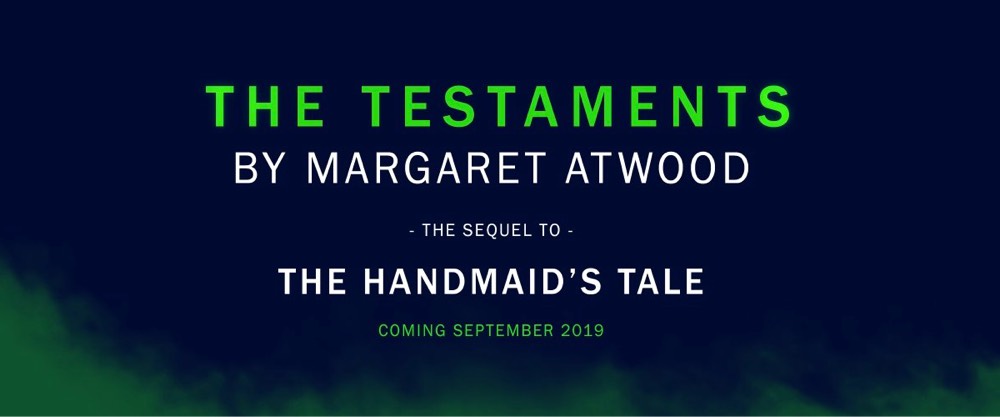
Did we really need a sequel to The Handmaid's Tale?
Ok, hear me out.. because I love Margaret Atwood, I really do.
But honestly, before it was announced yesterday that Atwood was penning a sequel set 15 years after The Handmaid's Tale, titled The Testaments; was there anyone out there hankering in wait for more?
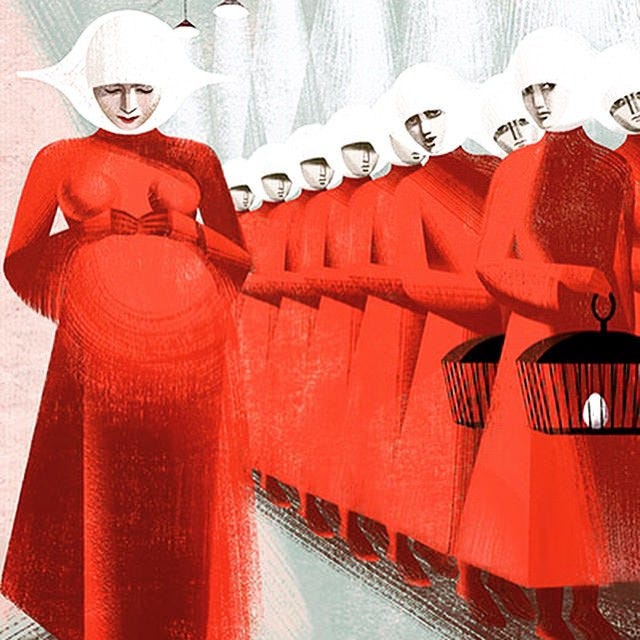
Like many women, I see The Handmaid's Tale as a seminal work of feminist literature. It may have been written years before I was born, yet its relevance persists. It tells a timeless truth about how women are treated, holding an unapologetic mirror to our own society, revealing the ugly oppression lurking beneath. Indeed, its cultural resonance as an example of how women are demeaned and controlled has led the costume of the Handmaiden (largely thanks to the TV adaption) to become symbolic shorthand for womens rights movements everywhere.

But all of that being said, why do we need a sequel? Wasn't the whole story told? Everything that needed to be said, said? Said succinctly, poetically, powerfully.
Following the sequel announcement yesterday afternoon my first thought was "Oh, I'll definitely be reading that". But my own certainty gave me pause:
Why was I so sure I would like it?
Why, when the common denominator of sequels tends to be that they detract from, rather than add to, the legacy of the original? (Chief exception here being High School Musical 2, obviously)
I'm not saying it will be bad. I'm not saying it can't be the greatest literary work of the decade. Knowing Atwood's writing, it'll likely be gut-punchingly good. Nor am I critical of the need for more feminist literature.We are in constant need of works that examine, deconstruct and shed light on this bizarre gendered world we live in. But we need new voices. And we do have them; we know they're out there.
So why are they not being marketed to the degree that a sequel, a mere elaboration of an already-well-made point, is?
It may be cynical of me, but I can't imagine that Atwood's plans for a sequel would have come to fruition had there not been a pre-exisiting fanbase for the massively popular television spinoff of her book. Again, being cynical, she surely would have seen the potential market value that Handmaid's Tale represented.

And this is linked to a wider trend in publishing.
It seems the publishing world, in its constant effort to stay relevant, is going the way of cinema: rehashing old properties, capitalizing on nostalgia and trusting only in already-established names.
 One need only look at recent bestseller lists to see this is pandemic to the industry; The Harry Potter series finished years ago but The Cursed Child and both Fantastic Beasts screenplays sold like hot cakes. Neither property represented anything remotely new, or original, but were familiar, safe (And dare I say it, boring) purchases, which will no doubt be repeated and repeated until every detail of the wizarding world down the type of toilet paper used by Arthur Weasley's dad has been exhumed.
At the other end of the spectrum you have Harper Lee's Go Set A Watchman, pushed out under dubious authorial consent and absolutely not presented in the way it was originally intended. Lee's artistic intent was sacrificed in the name of a huge payday, yet we all still bought it, because it's Harper Lee, and, well, we love Harper Lee. And it is precisely this knee-jerk buying response elicited by established names that seems to be the publisher's goal.
Margaret Atwood is well-known, widely read and hugely respected, with a TV audience to boot. She is a publishing goldmine.
The angle of her publishers seems to be that the world of Gilead is more relevant than ever to women's rights. And yes, it is. But we already have a book about it. That's why women are wearing Handmaiden costumes to rallies. And, even as Atwood remarks that her inspiration is "the world we've been living in" - a noble sentiment to be sure - I can't help but feel like surely someone, somewhere else, has something new to say?
I'm not saying The Testaments won't have any literary value, but I am saying that the steamrolling of publishing by big name authors represents a wider, worrying trend in arts and media wherein safe success is valued far and above creative risk. The only books deserving of large-scale marketing campaigns and wide readership are those written by already established authors, often nitpicking their own work which was completed yonks ago.
And that's sad. Because a world of stories told by the same few people means a very narrow choice of stories.
I worry about all the possibly brilliant, contemporary voices I'll never get to read because they were shuffled off the shelf to make way for the latest Atwood. Even after writing all this, I know I'll probably buy a copy of The Testaments.
I'm no expert on any of this - just a girl with a blog. But I've still got to wonder, where is the room for creative risk, for originality?
Where is the room for new and diverse voices?
And one last time, do we really, really need another Handmaid's Tale?
Doesn't it do more on its own, a singular, powerful voice against oppression?
Do we really want to mess with that?


0 comments